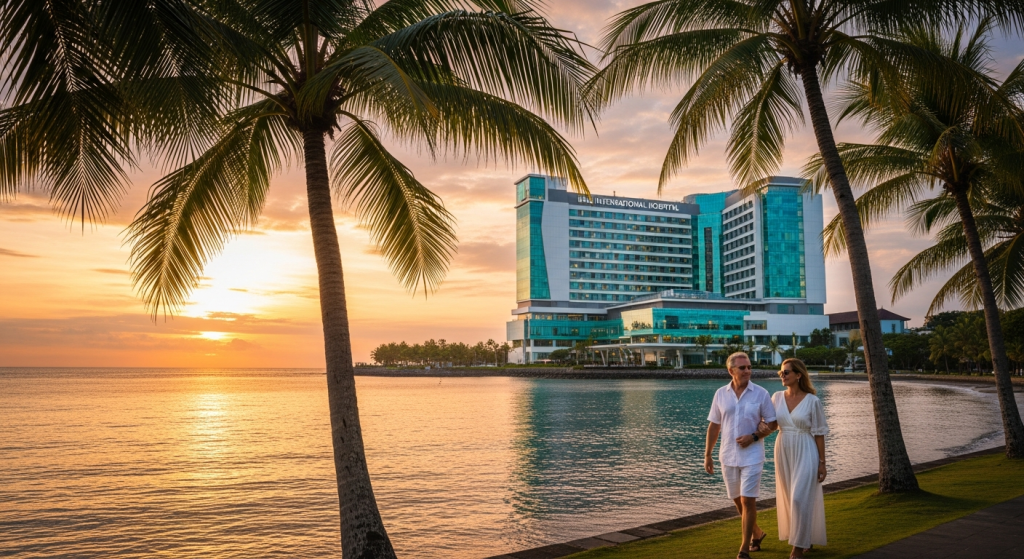
The morning light in Sanur arrives with a gentle warmth, illuminating the coastline where the Bali Sanur SEZ takes shape. Air carries the scent of frangipani and a subtle saline tang, a constant reminder of the ocean’s proximity. This is the setting for a unique convergence of advanced healthcare and strategic investment, a place where timing can enhance both wellness and financial opportunity.
The Dry Season Advantage: May to September for Optimal Engagement
From May through September, Bali experiences its dry season, characterized by lower humidity and consistent sunshine. This climate is particularly conducive for individuals seeking medical care at the Bali International Hospital, an affiliate of Mayo Clinic IHC. Post-operative recovery, especially for procedures like orthopedic joint replacements or cardiac rehabilitation, benefits significantly from stable weather conditions, minimizing discomfort and promoting outdoor mobility. Average daytime temperatures during this period hover around 28-30 degrees Celsius, with humidity levels dropping to 60-70 percent. This contrasts sharply with the higher humidity of the wet season, which can exceed 85 percent.
For investors evaluating the medical tourism investment zone, the dry season offers clear advantages. Site visits to the Sanur SEZ development are more comfortable, facilitating comprehensive assessments of real estate opportunities and infrastructure progress. Government officials and key development partners, including representatives from Pertamedika, often schedule significant meetings and investor briefings during these months, aligning with international travel patterns. The Sanur SEZ was officially designated in 2022, with the Bali International Hospital projected to commence operations in 2024. The Indonesian government’s commitment to this SEZ, one of 19 operational Special Economic Zones across the archipelago, underscores its strategic importance. Planning your visit within this five-month window ensures access to a more vibrant and accessible operational environment.
Monsoon Season Nuances: October to April for Strategic Retreats
While the dry season is generally preferred, the monsoon period, extending from October to April, presents its own strategic advantages for certain medical tourism patients and discerning investors. Rainfall typically peaks in January and February, with average monthly precipitation reaching 270-350 millimeters. However, showers are often localized and intermittent, rarely lasting all day. The Bali International Hospital, designed with state-of-the-art facilities, ensures a comfortable and climate-controlled environment regardless of external conditions. For aesthetic procedures, such as advanced dermatological treatments or post-surgical recovery requiring minimal sun exposure, the monsoon season offers a discreet window. Patients undergoing IVF or stem cell therapies may find the quieter atmosphere conducive to focused recovery, away from the dry season’s higher tourist volumes.
From an investment perspective, the monsoon season can offer a different kind of access. While major events might be less frequent, this period can be ideal for in-depth, focused discussions with local partners and SEZ management without the rush of peak season. Real estate evaluations, particularly for long-term development projects within the Bali Sanur SEZ, can benefit from observing the land and infrastructure under varying weather conditions. The government-backed nature of the SEZ, with Pertamedika’s involvement, ensures consistent progress irrespective of seasonality. The Sanur SEZ aims to attract over $800 million in investment by 2045, with a significant portion directed towards healthcare infrastructure. This period allows for a more introspective assessment, potentially revealing opportunities overlooked during busier times.
Precision Timing for Specialized Medical Treatments
The efficacy and comfort of various medical treatments within the Bali Sanur SEZ can be subtly influenced by the time of year. For cardiology and orthopedic patients, the dry season (May-September) typically facilitates easier mobility for rehabilitation and follow-up appointments, with less humidity-related discomfort. The average daily temperature range of 26-31°C supports outdoor activity and general well-being, crucial for recovery. The Bali International Hospital, a WHO-accredited facility through its Mayo Clinic IHC affiliation, provides advanced care year-round, but patient experience can be enhanced by optimal climate conditions. For complex surgical interventions, such as those performed by orthopedic surgeons utilizing advanced robotic systems, a calm and predictable environment is always prioritized.
Conversely, specific procedures like certain aesthetic dermatology treatments or intensive dental work might be less impacted by external weather, and the quieter monsoon season could offer more scheduling flexibility and privacy. Patients undergoing IVF treatments, which often involve multi-week protocols, can benefit from the reduced tourist traffic during the wet season, ensuring more focused attention from specialists. The hospital’s comprehensive services, spanning from stem cell research to advanced aesthetic surgery, operate continuously. With over 200 planned beds and a focus on sub-specialties, the medical staff, trained to Mayo Clinic standards, are available throughout the year. Understanding these nuances allows for a personalized approach to medical travel, aligning treatment needs with Bali’s seasonal rhythms. More information on specific medical services can be found on our medical services page.
The Investor’s Calendar: SEZ Events and Strategic Windows
For UHNW SEZ investors, family offices, and healthcare advisors, timing investment decisions and visits to the Bali Sanur SEZ aligns with both global business cycles and local operational rhythms. Key investment conferences, government briefings on SEZ progress, and real estate showcases are often concentrated during the dry season, particularly from June to August. This period frequently sees delegations from international financial institutions and healthcare advisory firms, facilitating networking and due diligence. The Indonesian government actively promotes the Sanur SEZ as a premier medical tourism destination, aiming to capture a significant share of the regional market currently served by Bumrungrad in Bangkok and various facilities in Singapore. This strategic initiative targets a market valued at over $10 billion annually.
However, significant investment discussions and detailed negotiations can also occur during the shoulder months (April, October) or even the monsoon season for those seeking a more focused, less crowded environment. Major announcements regarding new partnerships or the expansion of facilities at the Bali International Hospital, a Pertamedika-backed project, are strategically timed throughout the year to maximize impact. Understanding the cadence of the Indonesian investment landscape, including the annual budget cycles and regulatory updates, is crucial. For instance, the Ministry of Health often releases new guidelines or incentives that might influence investment, making regular engagement with the SEZ authority beneficial. For a deeper investment opportunities, visit our investment page.
Navigating Peak and Shoulder Seasons: Practical Considerations
Understanding the distinction between peak and shoulder seasons for the Bali Sanur SEZ is vital for both medical tourism patients and investors. The peak dry season (July-August) and holiday periods (December-January) see higher visitor numbers to Bali, which can impact flight availability and accommodation costs. While the Bali International Hospital and associated facilities within the SEZ offer premium services, general travel logistics can be smoother during shoulder seasons (May-June, September-October). During these periods, average flight prices can be 15-25% lower, and hotel occupancy rates typically decrease by 10-20% compared to peak. This allows for more relaxed travel and potentially greater flexibility in scheduling appointments or investor meetings.
For medical tourists, arriving in the shoulder season can provide a calmer pre-treatment environment and a more serene recovery period. For investors, these periods offer a balanced view of the SEZ’s operational capacity without the full intensity of peak demand. The Sanur SEZ, strategically located approximately 15 kilometers from Ngurah Rai International Airport, ensures convenient access year-round. Public and private transport options are readily available, with typical travel times of 25-40 minutes depending on traffic. The SEZ’s robust infrastructure, designed for continuous operation, ensures that essential services and facilities remain fully accessible, providing a consistent experience regardless of the season. The commitment to WHO-accredited standards at the Bali International Hospital reinforces this reliability. For general information on Bali, refer to Indonesia.travel.
Beyond Weather: The Sanur SEZ Operational Calendar
While seasonal weather patterns influence the overall atmosphere of Bali, the operational heart of the Bali Sanur SEZ beats with unwavering consistency. The Bali International Hospital, with its Mayo Clinic IHC affiliation, maintains a year-round commitment to advanced medical care. Its facilities for cardiology, orthopedics, stem cell research, IVF, dental, and aesthetic treatments operate 365 days a year, ensuring that urgent medical needs and planned procedures are accommodated without seasonal interruption. This continuous operation is a cornerstone of the SEZ’s mandate as a leading medical tourism destination, supported by Pertamedika and the Indonesian government.
The Sanur SEZ is not merely a seasonal attraction but a permanent fixture in the global medical landscape. Its WHO accreditation process underscores a dedication to international standards of care and safety, a benchmark that transcends climatic variations. Investment opportunities within this zone, ranging from real estate development to healthcare technology ventures, are also continuous. The strategic vision for the SEZ, outlined in Presidential Regulation No. 32 of 2022, emphasizes long-term growth and stability. Whether seeking world-class medical treatment or evaluating a significant investment in a government-backed healthcare hub, the Sanur SEZ is prepared to engage at any point in the calendar. For further details on the SEZ framework, consult sources like Wikipedia’s entry on Indonesian SEZs.
The optimal timing for your engagement with the Bali Sanur SEZ depends on specific objectives, yet its core offerings remain steadfast. Whether you are a patient seeking specialized care at the Bali International Hospital, an investor exploring the robust medical tourism investment zone, or a healthcare advisor evaluating the future of regional health, the Sanur SEZ provides a compelling proposition. Explore the possibilities and plan your visit or investment strategy by connecting with our team. Discover how the unique blend of advanced healthcare, strategic location, and government backing creates value. Visit our homepage to learn more.